Key takeaways
- Nearshore accounting is purchased for overlap hours rather than proximity. A Bogotá organization operating 9:00 to 18:00 locally shares 8 working hours with a US Eastern controller during August. A Manila organization on an identical schedule shares none.
- Zero overlap functions as an advantage for queued production and as a significant liability for interactive investigation. An identical three-exchange variance inquiry resolves within 2 hours 20 minutes through a nearshore relationship and consumes 67 hours through an offshore relationship.
- The overlap window relocates twice annually. American clocks advance on the second Sunday of March under 15 U.S.C. 260a, whereas Colombia, mainland Mexico, India, and the Philippines maintain constant offsets throughout the calendar.
- Mexico discontinued nationwide daylight saving observance on 30 October 2022. A Mexico City delivery team drops from 8 shared hours to 7 each summer, while a Tijuana organization inside the border exception preserves 6 hours permanently.
- Domestic compensation carries a published floor. The Bureau of Labor Statistics recorded median annual compensation of $49,210 for bookkeeping, accounting, and auditing clerks as of May 2024, exclusive of employer burden.
A Bogotá bookkeeping organization shares 8 working hours with a New York controller throughout August. A Manila organization observing an identical 9:00-to-18:00 local schedule shares none. That solitary measurement, overlap hours, governs considerably more of an outsourced accounting relationship than the geographic classification attached to it. Nearshore accounting is marketed principally on that measurement, which most engagement letters never state.
The conventional classifications describe geography. What a finance organization genuinely purchases is response latency. Production that accumulates inside a documented queue remains indifferent to latency, while investigation requiring conversation depends upon essentially nothing else, and month-end close consists predominantly of the investigative variety.
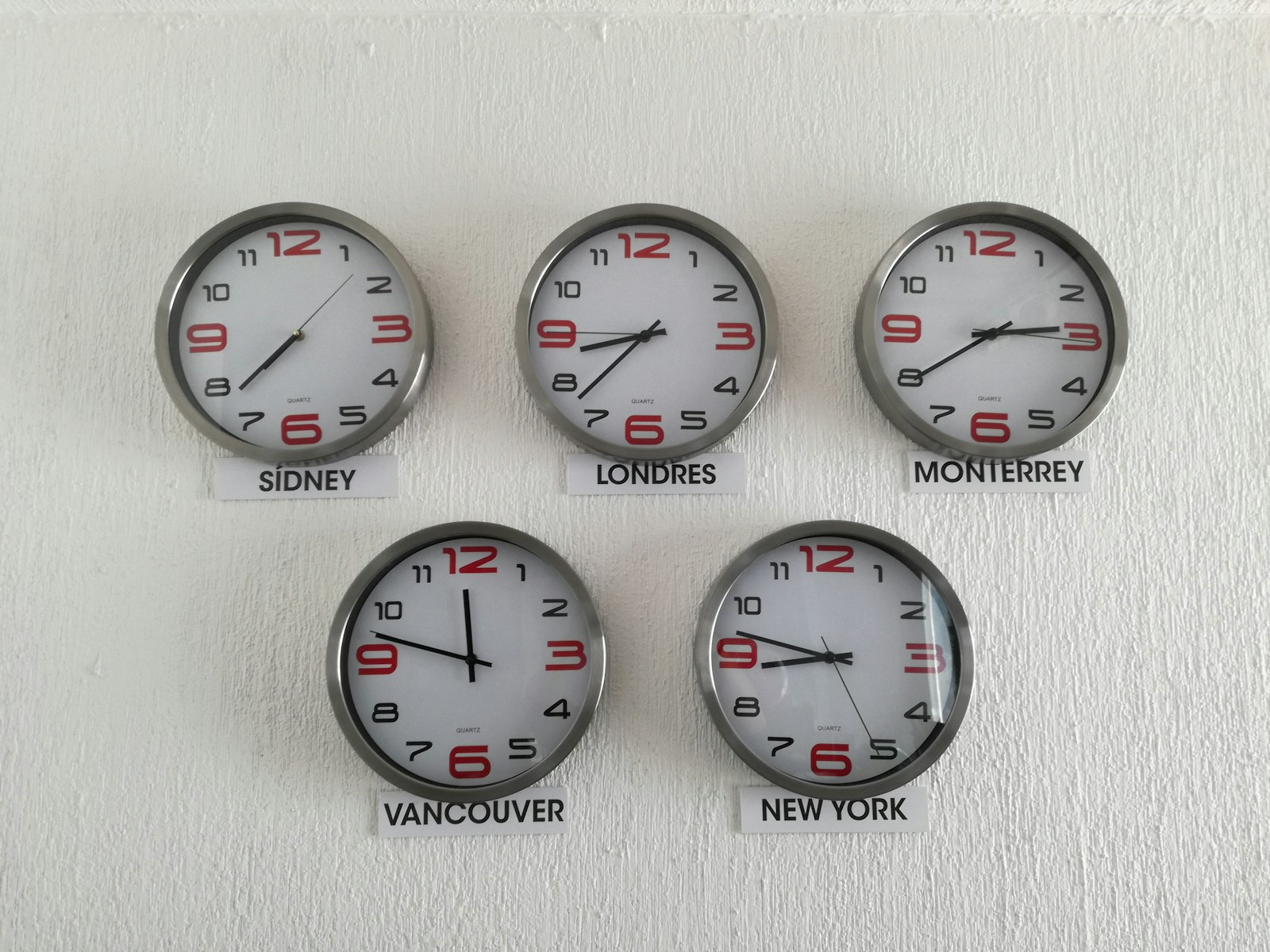
What separates onshore, nearshore, and offshore delivery?
The terminology designates distance from the purchaser’s operating day rather than capability or price. Onshore delivery situates the practitioners within the client’s own jurisdiction. Nearshore delivery situates them in a neighboring country approximately three hours from the client’s business day, which for American purchasers designates Latin America and the Caribbean. Offshore delivery situates them sufficiently eastward that the respective working days scarcely intersect, conventionally India or the Philippines.
Vendors market these arrangements as differentiated service tiers. They resemble scheduling configurations considerably more closely. The accounting competence available throughout Bengaluru is not categorically distinguishable from the competence available throughout Bogotá, nor from the competence available in Tampa. What genuinely differentiates them is when production occurs relative to the client’s availability to adjudicate questions concerning it.
How many working hours does each model share with a US desk?
Between zero and nine, and the calculation changes during March and November. The comparison below assumes both organizations operate 9:00 to 18:00 within their respective cities, measuring the intersection against a US Eastern controller. Offsets are accurate as of August 2026.
| Model | Delivery city | Offset from US Eastern | Shared hours, Nov–Mar | Shared hours, Mar–Nov | Observes the American clock change |
|---|---|---|---|---|---|
| Onshore | Tampa, Florida | None | 9 | 9 | Yes |
| Nearshore | Bogotá, Colombia | Identical during winter, 1 hour behind during summer | 9 | 8 | No, discontinued after 1993 |
| Nearshore | Mexico City, Mexico | 1 hour behind during winter, 2 during summer | 8 | 7 | No, discontinued 30 October 2022 |
| Nearshore | Tijuana, Baja California | 3 hours behind, permanently | 6 | 6 | Yes, under the border exception |
| Offshore | Bengaluru, India | 10.5 hours ahead during winter, 9.5 during summer | 0 | 0 | No |
| Offshore | Manila, Philippines | 13 hours ahead during winter, 12 during summer | 0 | 0 | No |
Two conclusions emerge immediately. Nearshore delivery never equals the domestic figure throughout summer, and offshore delivery never achieves a solitary shared hour during either season. An offshore organization answering during American business hours is necessarily operating a night shift, which represents a staffing commitment the purchaser should price explicitly rather than presume.
Is nearshore accounting worth the premium over offshore?
Exclusively when the production genuinely requires conversation. Nearshore accounting normally prices above offshore alternatives, and the differential purchases shared hours rather than superior bookkeeping. Where the assignment constitutes a documented queue carrying complete inputs, those shared hours purchase essentially nothing, and the differential represents waste.
The determining question is whether the assignment generates inquiries. Coding 1,180 clean transactions against an established chart of accounts generates none. Investigating why an intercompany balance moved unexpectedly generates several, and every one suspends production until somebody adjudicates it.
Offshore delivery earns its reputation legitimately here. Deliver a documented queue to a Manila organization at 18:00 Eastern on Tuesday. They commence at 9:00 Manila, equivalent to 21:00 Eastern, concluding nine hours afterward at 6:00 Eastern Wednesday. The controller opens finished work 15 hours after handoff, having expended zero American working hours upon it.
A domestic organization receiving the identical queue at 18:00 Tuesday returns it Wednesday evening, an entire business day later. Offshore delivery is genuinely faster here, and the differentiating variable remains the absence of conversation.
What does zero overlap cost on a single close question?
Approximately 67 hours instead of 2 hours 20 minutes, for indistinguishable production. Consider an $8,400 unreconciled variance surfacing at 14:00 Eastern on a Tuesday during August. Resolution requires three sequential exchanges: an initial inquiry, a clarifying inquiry, and a confirmation. Practitioner labor totals roughly 90 minutes under either arrangement.
- Nearshore, Bogotá. 14:00 Eastern corresponds to 13:00 in Bogotá, comfortably inside the 8-hour shared window. The initial response arrives by 14:40, the second by 15:30, the confirmation by 16:20. All three exchanges conclude Tuesday. Elapsed duration: 2 hours 20 minutes.
- Offshore, Manila. 14:00 Eastern Tuesday corresponds to 2:00 Wednesday in Manila. The organization encounters the inquiry when its day commences at 21:00 Eastern, responding by 23:00 Eastern. The controller reviews that response Wednesday at 9:00. Every subsequent exchange consumes another overnight cycle, positioning the confirmation on Friday morning. Elapsed duration: 67 hours, or three business days.
Neither organization performed slowly. The offshore practitioners remained idle on this particular item throughout 62 of those 67 hours, awaiting a counterpart’s availability. Against a close targeting five business days, expending three of them upon a solitary variance distinguishes punctual delivery from delinquent delivery.
Why does the overlap window shift twice a year?
Because America relocates its clocks and most delivery jurisdictions no longer reciprocate. Federal legislation establishes the American dates. Under 15 U.S.C. 260a, the statute provides:
During the period commencing at 2 o’clock antemeridian on the second Sunday of March of each year and ending at 2 o’clock antemeridian on the first Sunday of November of each year, the standard time of each zone…shall be advanced one hour.
Colombia last observed daylight saving in 1993. Mexico discontinued the practice nationally on 30 October 2022. That law preserved a northern-border exception covering the whole of Baja California, alongside listed border municipalities of Coahuila, Nuevo León, and Tamaulipas. A further reform published that November added eight Chihuahua border municipalities. Those jurisdictions still follow the American calendar. India and the Philippines observe no seasonal adjustment.
The operational consequence is contractual. An organization negotiating eight hours of daily overlap with a Bogotá provider during January is actually measuring a nine-hour window. It will receive eight beginning the second Sunday in March. A Mexico City arrangement deteriorates from 8 hours to 7. A Tijuana arrangement remains unaffected entirely, because both jurisdictions transition simultaneously.
Service agreements articulated in local business hours therefore reprice themselves twice annually. Stating the overlap window in the client’s own time zone eliminates the ambiguity permanently.
Which accounting work belongs in which model?
Sort assignments by inquiry density rather than by task name. Production governed by documented rules travels comfortably into any jurisdiction. Production governed by professional judgment requires shared hours, and the further a delivery organization sits from the purchaser’s operating day, the more every adjudication costs in calendar duration.
- Offshore accommodates transaction coding against an established chart of accounts, bank feed matching, accounts payable entry, payroll preparation, and documentation indexing. Inputs arrive complete, converting the overnight cycle into uncompensated throughput.
- Nearshore accommodates exception reconciliation, accrual and cutoff review, revenue schedules dependent upon contract interpretation, and anything a controller examines the same afternoon. Seven to nine shared hours absorb several inquiry rounds inside a single date.
- Onshore accommodates the review layer, close sign-off, board and lender reporting, and every judgment the organization answers for by name. This tier remains deliberately compact, and clients invariably notice it.
Most organizations conclude with all three configurations, partitioned by assignment rather than by vendor. Aaron Ressel scopes a delivery partition against the close calendar before rate negotiations commence. An arrangement conserving 30% of hourly compensation while adding two days to the close has traded the wrong variable. That sequencing constitutes what the Continuous Close Method™ encodes.
Cost still belongs in the decision, and the domestic component is published. The Bureau of Labor Statistics reported median annual compensation of $49,210 for bookkeeping, accounting, and auditing clerks as of May 2024. Its employment projections counted 1,613,400 positions in the 2024 base year, against a projected 6% contraction throughout 2024 to 2034. That figure excludes payroll taxation, benefits, software, and supervision.
Vendor rates throughout every tier vary excessively for benchmark quotation, which explains why the overlap window remains the more dependable negotiating instrument. For the delivery mechanics underlying offshore arrangements specifically, examine how offshore bookkeeping and CPA firm outsourcing operates. For the timing objective any partition ultimately serves, examine the month-end close benchmarks by company size, and the surrounding provider landscape appears within the startup accounting market map.
Frequently asked questions about nearshore and offshore accounting
What is the difference between nearshore and offshore accounting?
Shared working hours constitute the difference. Nearshore delivery operates within approximately three hours of the client’s business day, so a Bogotá organization shares 8 to 9 hours with a US Eastern controller. Offshore delivery operates sufficiently eastward that a Manila or Bengaluru organization observing standard local hours shares none.
Does nearshore accounting cost more than offshore?
Usually yes, and the differential purchases shared hours rather than superior production. That differential justifies itself on judgment-intensive assignments generating multiple inquiry rounds. Against a documented queue carrying complete inputs it purchases nothing, because the production needs no conversation to finish.
Can an offshore team work US business hours?
Certainly, by operating a night shift. A Manila organization covering 9:00 to 18:00 Eastern is working 21:00 to 6:00 locally. That configuration remains available and represents a genuine staffing expense, so purchasers should confirm it contractually rather than presume it from an advertised overlap figure.
Does daylight saving time really change the overlap window?
It relocates the window by an entire hour throughout most nearshore arrangements. American clocks advance on the second Sunday of March under 15 U.S.C. 260a, while Colombia, mainland Mexico, India, and the Philippines remain stationary. A Bogotá overlap measuring 9 hours during February measures 8 hours in April, without anybody modifying a schedule.
Which accounting tasks should stay onshore?
The review layer, alongside anything the organization answers for by name. Close sign-off, board and lender reporting, and adjudications concerning accruals or revenue treatment belong with the practitioners accountable for them. Production beneath that layer may occupy whichever jurisdiction corresponds to its inquiry density.