The short answer: A rolling cash flow forecast is a monthly model that always looks the same distance ahead, usually 12 to 18 months, because each close adds a new month as the finished one drops off. In the worked example below, the rolling view shows 9.5 months of runway while the static budget still implies 12.
- A calendar-year budget sees only 5.5 months ahead on average across the year, and 3 months by the end of September.
- Re-forecast after every monthly close, using actual cash as the new starting point and drivers for every line.
- Going-concern rules look one year past the date the statements are issued, so a 12-month budget is often 3.5 months too short.
- Keep the annual budget as a target, and stop using it to answer cash questions.
Last updated October 2026.
The annual budget is approved in December and starts aging in January. By September it describes a quarter that has already happened and a fourth quarter that is three months long. Founders still read it as a forecast.
The rolling format fixes the horizon problem by design. The sections below define it, compare it with the static budget, set out horizon and cadence by company stage, and run the runway arithmetic for a venture-backed software company whose budget was six months stale.

What is a rolling cash flow forecast?
A rolling cash flow forecast is a projection of cash receipts and payments that extends a fixed number of months past today and is extended by one month after every close. The horizon never shrinks.
Each cycle replaces the oldest forecast month with actual results, then adds a new month at the far end. The model is driver-based. Revenue comes from customer counts, pricing, and collection days. Payroll comes from the hiring plan. Vendor spend comes from contracts and run rates.
Weekly cash timing belongs in a separate tool. The 13-week cash flow forecast names individual invoices and paydays for the next quarter. The rolling model answers a longer question: how many months of cash remain under the current plan.
How does a rolling forecast differ from a static budget?
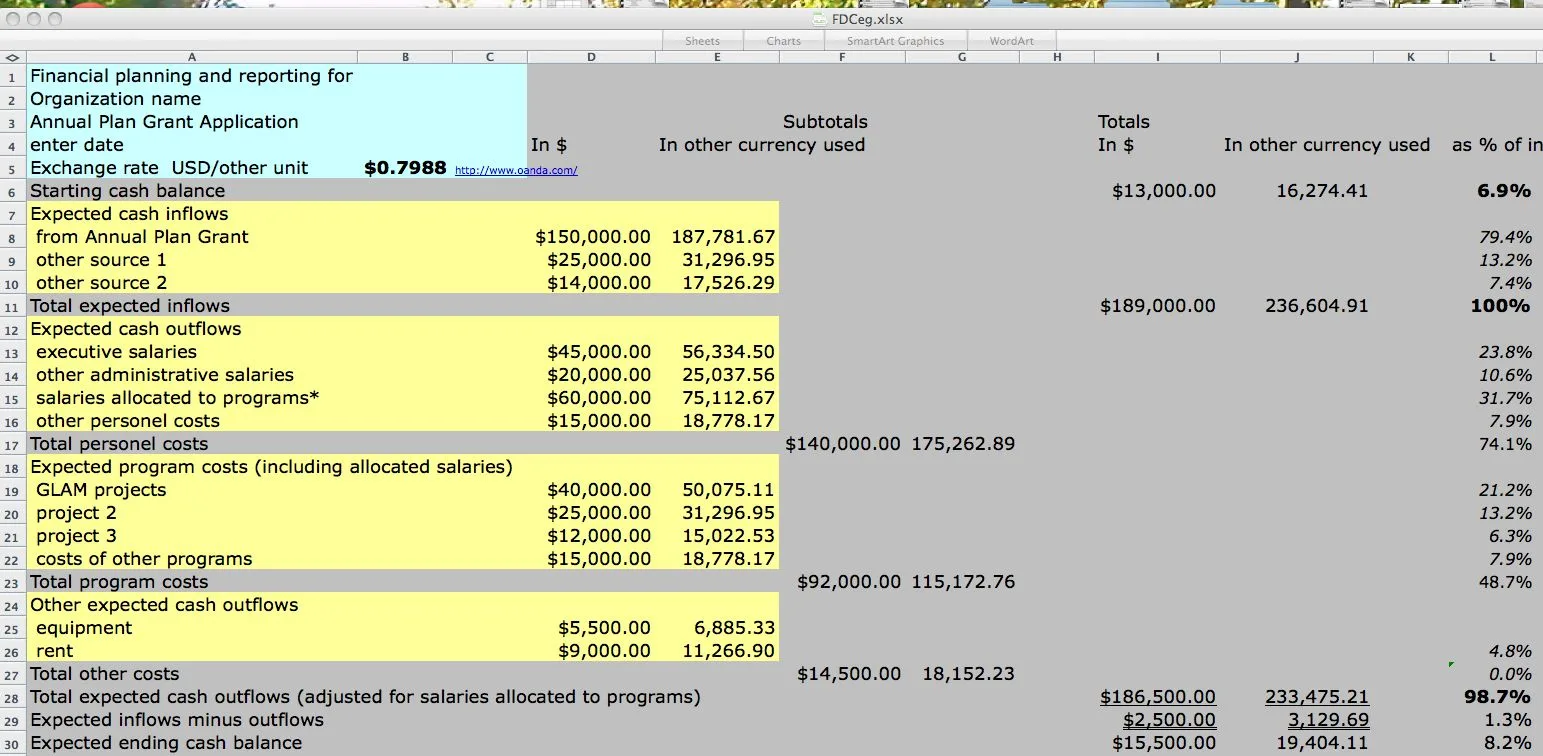
A static budget covers a fixed fiscal year and is revised rarely, so its forward view shrinks every month. A rolling forecast keeps a constant horizon and is rebuilt from actuals after each close.
| Dimension | Static annual budget | Rolling cash flow forecast |
|---|---|---|
| Horizon | Fixed fiscal year; shrinks from 12 months to 0 | Constant 12 to 18 months |
| Update cadence | Once a year, sometimes one mid-year revision | After every monthly close |
| Starting point | Prior-year run rate | Actual cash at the latest close |
| Basis | Department spending targets | Drivers: headcount, customers, collection days |
| Forward visibility at end of September | 3 months | 12 to 18 months |
| Main use | Targets, compensation, board approval | Runway, hiring pace, raise timing |
The visibility gap compounds. At the end of month one, a calendar-year budget sees 11 months ahead; at the end of month twelve, it sees none. Averaged across the year, that is (11 + 10 + … + 0) ÷ 12 = 5.5 months of forward view.
Should you retire the annual budget entirely?
Retire it as a forecast and keep it as a target. Boards, lenders, and compensation plans still need a fixed yardstick, and the approved budget remains that yardstick.
The change is in which document answers cash questions. Hiring decisions, raise timing, and runway reporting move to the rolling model. The budget becomes a column in the variance report, where it records what was promised.
Funded companies that gate spending to milestones can pair the two directly. Our guide to milestone-based budgeting shows how release gates sit on top of a forecast that keeps moving.
How far forward should a rolling forecast extend?
Twelve months is the floor for most companies, and 18 months suits venture-backed startups that need to time a raise. The going-concern rules explain the floor.
Under ASC 205-40, added by FASB Accounting Standards Update 2014-15, management evaluates whether it can meet obligations “within one year after the date that the financial statements are issued (or available to be issued).” The window starts at issuance, not at year-end.
Run the dates. Fiscal 2026 statements issued on April 15, 2027 require a view through April 15, 2028. That is 15.5 months past the December 31, 2026 balance sheet. A 2027 budget ends on December 31, 2027, which leaves 3.5 months uncovered.
Public companies face a parallel line. In SEC Release No. 33-10890, the Commission codified guidance that short-term liquidity “covers cash needs up to 12 months into the future.” The 12-month standard is a reporting convention, not an operating ceiling.
| Company profile | Horizon | Re-forecast cadence | Paired tool |
|---|---|---|---|
| Seed stage, under 18 months of cash | 12 months | Every monthly close | 13-week forecast |
| Series A to B, planning a raise | 18 months | Monthly; drivers reviewed quarterly | 13-week forecast and milestone budget |
| Profitable, $10M to $50M revenue | 12 to 15 months | Monthly cash, quarterly drivers | Annual budget as target |
How often should you re-forecast?
Re-forecast once a month, within five business days of the close. The close supplies the actuals, and the forecast should never start from unreconciled cash.
Each cycle follows the same four steps:
- Replace last month’s forecast with the closed actuals and post the reconciled bank balance as opening cash.
- Log the variance on every line and label it timing, volume, or rate.
- Update the drivers that moved: hires, churn, pricing, and days sales outstanding.
- Add the new final month and recompute runway.
Quarterly cycles are too slow for companies with fewer than 18 months of cash. A variance that compounds for 90 days before anyone sees it can consume a full month of runway. The variance analysis at month-end close is the input that keeps each cycle honest.
What does a rolling re-forecast change? A worked example
A Series A software company started the year with $7,200,000 in cash. Its approved budget assumed net burn of $400,000 a month, which implied 18 months of runway, through June of the following year.
Actual net burn averaged $455,000 a month from January through June. Two engineering hires closed early and collections slowed from 38 to 47 days. Six months at $455,000 consumed $2,730,000, leaving $4,470,000 on June 30.
The budget had expected $4,800,000 ($7,200,000 minus 6 × $400,000). Read against the budget, the company still had 12.0 months of cash ($4,800,000 ÷ $400,000).
The July re-forecast rebuilt the drivers. Monthly receipts were $143,200, payroll for 38 employees at a $11,400 loaded cost was $433,200, and other operating spend was $180,000. Net burn was $470,000 a month.
Runway was $4,470,000 ÷ $470,000 = 9.5 months. The board’s policy was to begin a raise with at least 9 months of cash. The budget implied three months of slack; the rolling forecast said the raise had to start in July. The burn rate and runway guide covers the extension levers once the number is known.
What do your books need to support a rolling forecast?
A rolling forecast needs a monthly close that finishes on time and reconciles cash, receivables, payables, and deferred revenue. Without that, each cycle restarts from a wrong number.
- A fixed close calendar: actuals within five business days, so the re-forecast is not a month late.
- Accrual revenue under ASC 606: deferred revenue and billings separated, so collections can be forecast from contracts.
- A clean payables subledger: open bills in QuickBooks Online or Bill.com dated to their real due dates.
- A headcount roster: start dates, salaries, and benefits loads tied to payroll.
- A stable chart of accounts: forecast lines that map one-to-one to the ledger.
Under the Continuous Close Method™, reconciliations run as transactions land, so the forecast cycle starts the day the books close. Kevin Cahill typically agrees the horizon, the minimum-cash policy, and the review day with founders before the first model is built. Our outsourced CFO services include the monthly re-forecast. For the underlying mechanics, see how to build a cash flow forecast.
Frequently asked questions
What is a rolling cash flow forecast?
It is a driver-based projection of cash receipts and payments that always covers the same number of months ahead, usually 12 to 18. After each monthly close, the finished month is replaced with actuals and a new month is added at the end, so the horizon never shrinks.
How does a rolling forecast differ from a static budget?
A static budget covers one fixed fiscal year and is rarely revised, so its forward view falls from 12 months in January to zero in December. A rolling forecast keeps a constant horizon and restarts from actual cash at every close, which makes it the better tool for runway and hiring decisions.
How far forward should a rolling forecast extend?
Twelve months is the practical minimum, and venture-backed startups planning a raise often use 18. Going-concern guidance in ASC 205-40 looks one year past the date the financial statements are issued, so a forecast that ends at the fiscal year-end usually falls short of that window.
How often should you re-forecast?
Monthly, within about five business days of the close, is the standard cadence for companies with less than 18 months of cash. Each cycle posts actuals, labels variances, updates the drivers that moved, and adds a new final month before runway is recalculated.
What do your books need to support a rolling forecast?
The books need an on-time monthly close with reconciled cash, receivables, payables, and deferred revenue, plus a headcount roster tied to payroll. Without reconciled actuals, each re-forecast starts from a wrong opening balance and the runway figure drifts.